
Learn how to start investing in the stock market from scratch, avoid common beginner mistakes, and build smarter financial habits.
How to Start Investing in the Stock Market From Scratch and Avoid Losing Money: Beginner’s Complete Guide
Many people dream about investing, growing their money, and building a better financial future.
However, when they hear words like stocks, dividends, portfolios, market crashes, or investment strategies, everything suddenly feels complicated.
The truth is simple:
You do not need to be a Wall Street expert to understand the basics of investing.
What you really need is financial education, patience, a clear strategy, and the ability to avoid the most common mistakes beginners make.
Learning how to start investing in the stock market from scratch is one of the most valuable skills anyone can develop in today’s digital economy.
The stock market has helped millions of people participate in business growth, create long-term investment plans, and understand money at a deeper level.
But investing without knowledge can also lead to unnecessary risks.
This guide will explain the fundamentals every beginner should understand before making investment decisions.

What Is the Stock Market and How Does It Work?
Before investing money, it is important to understand what the stock market actually represents.
The stock market is a marketplace where investors can buy and sell ownership shares of publicly traded companies.
When you buy a stock, you are purchasing a small ownership percentage of that company.
If the company performs well over time, the value of your investment may increase.
However, stock prices constantly move because of factors like:
- Company performance
- Economic conditions
- Investor behavior
- Global events
- Market expectations
Understanding this helps beginners avoid thinking about investing as a quick-money system.
Successful investing is usually based on knowledge, research, discipline, and long-term thinking.
Why Learning Before Investing Is Essential
One of the biggest mistakes beginners make is investing without education.
Many new investors enter the market because:
- They saw someone making money online
- A friend recommended a stock
- A social media trend became popular
- They fear missing an opportunity
This emotional approach often creates poor decisions.
Financial education helps you understand:
✔ How investments work
✔ How risk works
✔ How to create realistic expectations
✔ How to protect your money
✔ How to make informed decisions
Knowledge becomes your strongest investment tool.

How to Start Investing in the Stock Market From Scratch Step by Step
Starting does not have to be complicated.
The key is building a strong foundation first.
Step 1: Understand Your Financial Situation
Before investing, analyze your personal finances.
Ask yourself:
- Do I understand my monthly income?
- Do I know my expenses?
- Do I have unnecessary debt?
- Do I have emergency savings?
Investing should be part of a complete financial strategy.
A strong financial foundation creates better decision-making.
Step 2: Learn Basic Investment Terms
Beginners should understand common stock market concepts before buying investments.
Important terms include:
| Term | Meaning |
|---|---|
| Stock | Ownership share of a company |
| Portfolio | Collection of investments |
| Dividend | Company profit distributed to investors |
| Risk | Possibility of losing value |
| Return | Investment performance |
| Diversification | Spreading investments |
Learning the language of investing makes the process less intimidating.
Different Types of Investments Beginners Should Know
The stock market offers multiple investment options.
Each one works differently.
Individual Stocks
Individual stocks represent ownership in specific companies.
Many investors choose companies they believe have strong long-term potential.
Advantages:
- Direct company ownership
- Growth opportunities
- Easy accessibility
Challenges:
- Requires research
- Higher individual company risk
ETFs (Exchange-Traded Funds)
ETFs are popular among beginners because they allow investors to own a collection of investments in one product.
Benefits include:
- Diversification
- Lower complexity
- Exposure to multiple companies
Many long-term investors use ETFs as part of their strategies.
Index Funds
Index funds are designed to follow specific market indexes.
They are often used by people looking for simple, long-term investing approaches.
They focus on:
- Consistency
- Diversification
- Long-term participation
Common Beginner Investing Mistakes That Can Cause Losses
Learning what not to do is just as important as learning what to do.
Mistake #1: Trying to Get Rich Quickly
The stock market is not a guaranteed shortcut to wealth.
Many beginners lose money because they chase unrealistic expectations.
Successful investors usually focus on:
- Long-term planning
- Continuous learning
- Risk management
Mistake #2: Investing Based on Emotions
Fear and excitement can influence decisions.
Examples:
Selling because everyone is scared.
Buying because everyone is excited.
Smart investing requires discipline.
Mistake #3: Putting Everything Into One Investment
Risk management matters.
Diversification helps reduce depending on only one company or asset.
A balanced approach is usually healthier for beginners.
Investing vs Saving: What Is the Difference?
Both are important but have different purposes.
| Saving | Investing |
| Lower risk | Higher risk |
| Short-term goals | Long-term goals |
| Easier access | Growth potential |
| More predictable | Market changes |
A smart financial strategy usually understands the role of both.
How Much Money Do Beginners Need to Start Investing?
One common myth is that investing is only for wealthy people.
Modern investing platforms have made markets more accessible than ever.
The most important thing is not starting with a huge amount.
The priority should be:
- Learning first
- Creating consistency
- Understanding risk
- Building good habits
Education should always come before large investments.
The Importance of Having an Investment Strategy
Random investing usually creates random results.
A strategy helps you answer:
- Why am I investing?
- What is my goal?
- How much risk can I accept?
- How long is my investment timeline?
Different investors have different objectives.
There is no single perfect strategy for everyone.
Recommended Digital Resource for Beginner Investors
Learning investing alone can feel overwhelming.
Having organized information can save time and help beginners understand the process faster.
Start Your Investing Journey With:
How to Start Investing in the Stock Market From Scratch and Avoid Losing Money
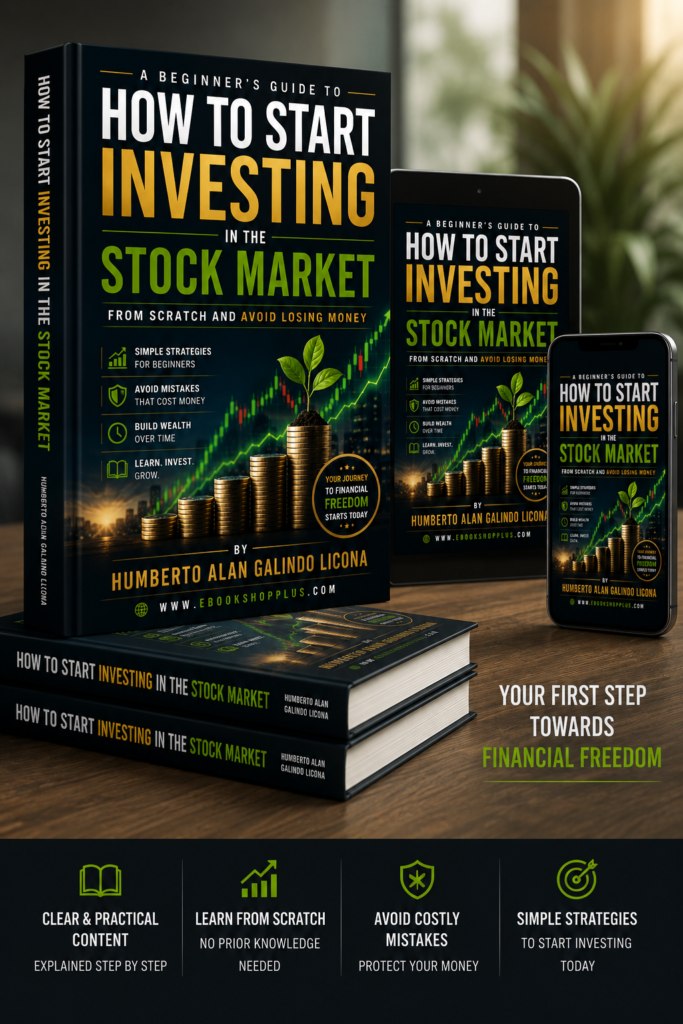
Inside this beginner-friendly digital guide you will discover:
✔ Stock market fundamentals
✔ Beginner investing concepts
✔ Common mistakes to avoid
✔ Financial education principles
✔ Steps to understand investing with confidence
Start learning today:
Why Digital Education Is Changing Personal Finance
Digital products like ebooks, courses, and online resources have changed the way people learn new skills.
Today, anyone with curiosity and discipline can access valuable knowledge from anywhere.
Financial education is becoming one of the most important skills in the modern world.
Learning how money works can influence your decisions for years.
Frequently Asked Questions (FAQ)
Is the stock market good for beginners?
Yes, beginners can learn about the stock market, but education and understanding risk are important before making financial decisions.
Can you lose money investing in stocks?
Yes. All investments involve risk, and stock prices can go up or down. Learning and risk management are important.
What should beginners learn before investing?
Beginners should understand stocks, diversification, risk, investment goals, and basic financial concepts.
Do I need a lot of money to start learning investing?
No. Learning about investing does not require large amounts of money. Education should come first.
What is the biggest mistake new investors make?
A common mistake is investing without understanding what they are buying or following trends without research.
Are ebooks useful for learning investing?
A well-structured ebook can help beginners organize information and understand important concepts step by step.
Conclusion: Start Your Investment Journey With Knowledge First
Investing is not only about buying stocks.
It is about understanding money, developing discipline, managing risk, and making educated decisions.
The best investors are usually lifelong learners.
Before focusing on results, focus on building your knowledge.
A strong financial foundation can help you make smarter decisions and approach investing with more confidence.
Your financial education starts with one step.
Take that step today.